
So, you want to know how much boat insurance costs? The short answer is, there isn't just one number.
But if you’re looking for a solid rule of thumb, here’s a good place to start: plan on paying somewhere between 1% and 1.5% of your boat’s insured value each year.
For a boat valued at $30,000, that works out to an annual premium of roughly $300 to $450.
Your Quick Answer to Boat Insurance Costs
While that 1.5% rule gives you a great ballpark estimate, the final price tag on your policy is shaped by a handful of factors unique to you and your boat. Think of it just like getting a car insurance quote—the premium for a sports car is going to be different than for a minivan. The same logic applies here.
At the end of the day, an insurer is just trying to measure risk. They need to figure out the odds of you filing a claim, and that means looking at everything from the kind of boat you own to where you'll be dropping anchor.
What Insurers Consider First
To give you a clearer picture of what drives your quote up or down, here are the core things every insurer looks at right off the bat:
- Your Boat’s Value and Type: A high-performance speedboat built for racing carries a whole different set of risks than a pontoon boat used for quiet afternoons on the lake.
- Your Navigational Waters: Boating on a calm, freshwater lake is seen as much lower risk compared to navigating the hurricane-prone coastal waters of the Atlantic.
- Your Boating Experience: A seasoned captain with a spotless record is almost always going to get a better rate than someone who just bought their first boat.
At its core, boat insurance is a balancing act between protection and price. Your goal is to find a policy that covers what you actually need without paying for extras you don't, giving you real peace of mind out on the water.
Now, let's talk about some real numbers. Across the United States, the average cost of boat insurance usually lands somewhere between $200 and $500 a year. But that average can be misleading because location changes everything.
For instance, premiums in a low-risk state like South Dakota might hover around $150. Meanwhile, rates down in Florida can easily top $450 or more, thanks to a much longer boating season and, of course, hurricane risk.
To give you a better sense of how this breaks down by vessel, here’s a quick snapshot of what you can expect to pay for different types of boats.
Estimated Annual Boat Insurance Premiums at a Glance
This table provides a quick look at average annual premium ranges for common boat types. It's a great way to see how much costs can vary just based on the vessel itself.
| Boat Type | Average Annual Premium Range |
|---|---|
| Personal Watercraft (e.g., Jet Ski) | $200 – $500 |
| Pontoon Boat | $250 – $750 |
| Fishing Boat (Freshwater) | $200 – $600 |
| Sailboat (under 27 feet) | $300 – $800 |
| Speedboat / Performance Boat | $500 – $1,500+ |
| Yacht (over 27 feet) | $800 – $3,000+ |
Keep in mind these are just estimates. Your final quote will depend on the other factors we've touched on. You can read more about how insurance costs vary by location and find detailed coverage information to get a complete picture.
This gives you the essentials, but now let’s dive deeper into what truly shapes that final number on your policy.
The Key Factors That Determine Your Premium
Figuring out what you'll pay for boat insurance is a bit like putting together a puzzle. Every piece—from the type of boat you own to where you drop anchor—represents a different risk factor that insurers have to weigh. Your final premium isn't just a number pulled from a hat; it's a carefully calculated price based on your unique situation.
Let's break down the most important factors that shape your quote.
Your Boat's Value, Type, and Speed
First things first, the insurance company wants to know all about your boat. It makes sense, right? A brand-new $100,000 speedboat with a massive engine is a much bigger financial risk to insure than a $15,000 pontoon boat that’s just for lazy days on the lake. The higher the boat's value, the more it would cost them to replace or repair it, and that drives up your premium.
Speed is the other big part of this equation. A high-performance boat built for speed is simply at a greater risk of getting into an accident than a slower vessel. Insurers look at horsepower as a direct clue to how much risk they’re taking on, so a faster boat will almost always cost more to cover.
Where You Cruise and Navigate
Your primary boating location plays a huge role in setting your rate. There's a world of difference between navigating a small, predictable inland lake in the Midwest and cruising the open ocean off the coast of Florida. Coastal areas, especially those in the hurricane belt, present a much higher risk of catastrophic damage from severe weather.
Because of this, boaters in states like Florida can expect to pay a lot more than those in less risky regions. The constant exposure to storms, the corrosive effects of saltwater, and crowded waterways all add up to higher premiums. And if you plan to take your boat into international waters, your rates will climb even higher to account for all the extra complexities involved. You can see a similar principle at play by understanding why Florida homeowners need hurricane insurance.
Your Boating Experience and History
Your personal track record on the water says a lot about your risk level. Insurers will dig into your boating and driving history to get a sense of how responsible you are. A skipper with years of experience under their belt and no claims is obviously a much safer bet than someone who just bought their first boat.
An experienced captain with a clean record demonstrates a lower likelihood of future accidents. This history of safe operation often translates directly into lower, more favorable insurance premiums.
On the flip side, a history of accidents, claims, or even a few speeding tickets on the road can signal a higher-risk profile, bumping up your costs. Proving you're a safe operator is one of the best things you can do to keep your insurance affordable.
This infographic breaks down how your boat's characteristics, coverage choices, and usage frequency come together to determine your final policy premium.
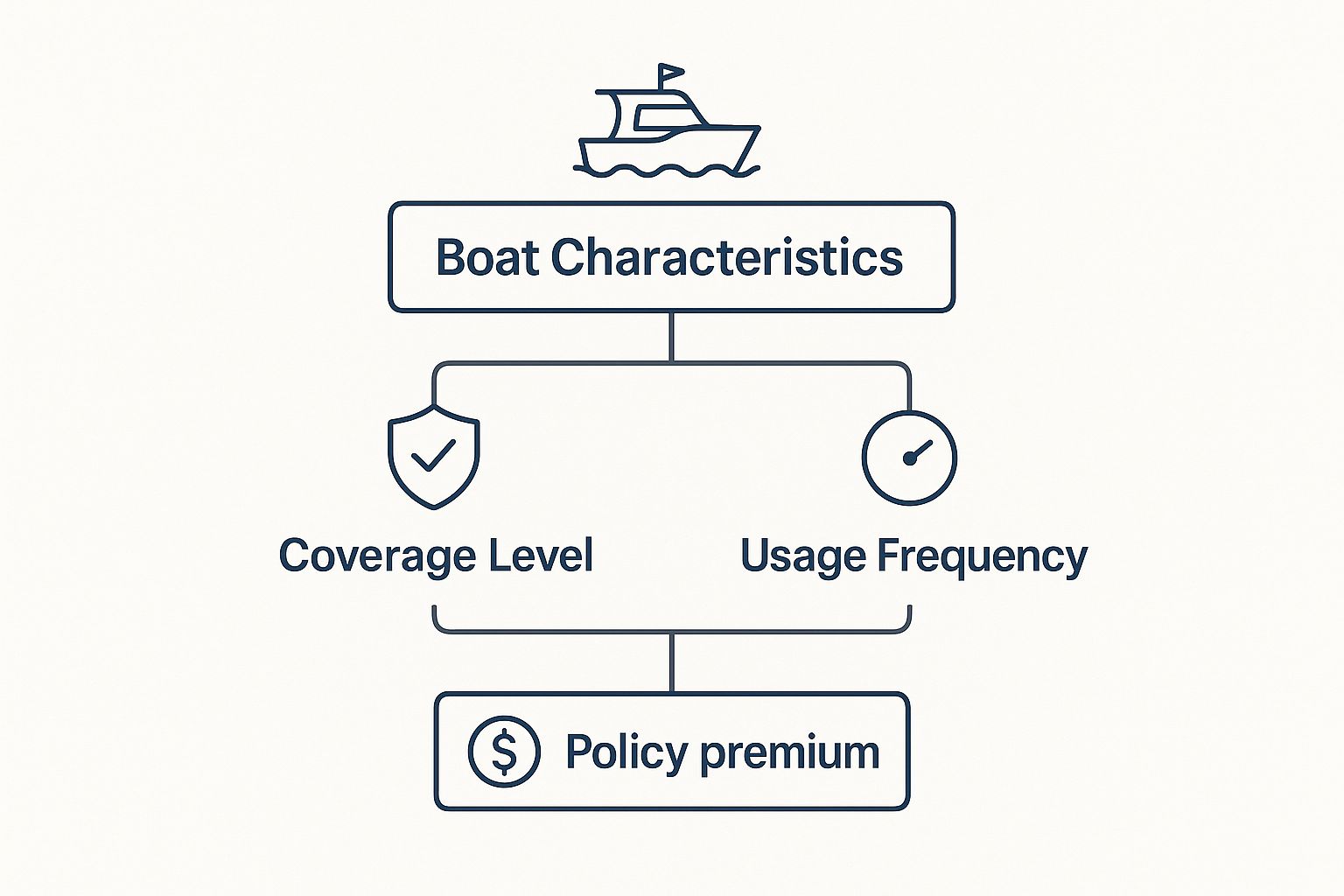
As you can see, all these elements are connected. The specifics of your boat and how you use it directly influence the coverage you need and, ultimately, the price you pay.
How You Use Your Boat
What you do with your boat is another key piece of the puzzle. An insurer will need to know if you're using it for personal recreation, competitive racing, or for commercial activities like fishing charters. Each use carries a totally different level of risk.
- Recreational Use: This is the most common and usually the cheapest to insure. It covers things like casual cruising, fishing with friends, and weekend getaways.
- Competitive Racing: This one’s a no-brainer. Racing involves high speeds and a much, much greater chance of collisions, leading to significantly higher premiums.
- Commercial Use: If your boat is a tool for your business, you'll need a commercial policy. These are priced differently to cover business-related liabilities and risks.
Your Chosen Coverage and Deductible
Finally, the amount and type of coverage you choose will directly swing your premium. A bare-bones, liability-only policy will be far cheaper than a comprehensive plan that covers physical damage to your boat, protects your personal belongings, and includes on-water towing.
Your deductible—the amount you agree to pay out-of-pocket on a claim before your insurance kicks in—also plays a big part. If you choose a higher deductible, say $1,000 instead of $500, your annual premium will go down. Why? Because you're telling the insurance company you're willing to take on more of the financial risk yourself.
Decoding Your Boat Insurance Coverage Options
To get a real handle on what boat insurance should cost, you have to look past the final price and understand what you're actually buying. It’s not just a single product; it's a bundle of different protections designed to shield you from specific financial nightmares out on the water.
Think of it like building a custom toolkit for your boat. You wouldn't use the same tools for a sailboat as you would for a bass boat, right? The same goes for insurance. You need to pick the right coverages to handle any job—or accident—that comes your way.
Let's break down the essential components you’ll find in almost every policy.
Core Coverage Your Policy Needs
Every solid boat insurance policy is built on two main pillars: liability protection and physical damage coverage. These are the absolute non-negotiables that protect both your bank account and your boat.
Liability coverage is your financial defense if you're at fault in an accident that hurts someone or damages their property. This could be anything from a classic collision with another boat to a guest slipping and getting injured on your deck. It’s the part of the policy that protects other people from you.
Physical damage coverage, on the other hand, is all about protecting your boat from the world. It’s what pays for repairs or even a full replacement if your boat, motor, or trailer gets damaged in a covered incident. We’re talking collisions, theft, vandalism, fire, or storm damage.
The single most crucial decision you'll make for physical damage coverage is choosing between 'Agreed Value' and 'Actual Cash Value'. This choice directly dictates how you get paid if your boat is a total loss, and it’s a huge driver of your premium.
Getting this right is critical. An Agreed Value policy is straightforward: you and the insurer agree on your boat's worth when you buy the policy. If it's totaled, you get that full amount, period. There's no haggling over depreciation.
In contrast, an Actual Cash Value policy pays what your boat was worth the moment before the loss, which means depreciation gets subtracted from your payout. It's cheaper upfront, but it can leave you with a much smaller check when you need it most.
Popular Add-Ons for Broader Protection
Once you have the basics locked in, you can start customizing your policy with optional coverages, often called endorsements. These are what fill the specific gaps in your protection and truly tailor the policy to how you use your boat. Naturally, each one will nudge your total premium a bit higher.
Here are some of the most common and valuable additions people choose:
- On-Water Towing and Assistance: This is the boater’s version of roadside assistance. If you break down on the lake, this helps cover the often-expensive cost of getting towed back to the marina.
- Fuel Spill Liability: Accidents can cause fuel leaks, and the environmental cleanup costs can be staggering. This coverage is designed to handle the bill for those legally required cleanup operations.
- Personal Effects Coverage: This protects all the gear you bring aboard—things like expensive fishing rods, water skis, coolers, or electronics—if they get lost, stolen, or damaged.
- Uninsured/Underinsured Boater Coverage: What happens if someone hits you and they have no insurance, or just the bare minimum? This coverage steps in to pay for your damages and injuries so you aren't left holding the bag.
By carefully mixing and matching these coverages, you build a policy that gives you peace of mind exactly where you need it. It’s the difference between being merely insured and being correctly insured for your specific life on the water.
Why Yacht and Superyacht Insurance Costs Are Different

When you move from a standard boat into the world of yachts, the insurance conversation changes completely. It’s not just about adding a few zeros to the premium. The entire way risk is calculated is a different ballgame, and the standard rules of boat insurance simply don't apply to these complex, high-value vessels.
Think of it like this: insuring a family sedan versus a high-performance race car. Sure, they're both cars, but the risks, potential repair bills, and sheer operational complexity are worlds apart. The same logic holds true when you compare a typical recreational boat to a yacht or superyacht.
Beyond Standard Risk Factors
A normal boat policy is built for local waters and basic liability. Yacht insurance, on the other hand, has to dig much deeper. Insurers are underwriting a far broader and more expensive set of potential claims, because the financial exposure is massive.
These policies are designed to handle unique situations that smaller boats will almost never encounter:
- Global Navigation Routes: Yachts often travel internationally, crossing oceans and navigating waters with wildly different risk levels—from piracy-prone areas to regions known for unpredictable, violent weather.
- Crew Liability: Unlike most boats, yachts have a professional crew. The insurance has to cover their welfare, potential injuries, and liability, which introduces a huge layer of complexity.
- Specialized Equipment: From advanced navigation electronics to custom tenders and multi-million-dollar interiors, the onboard systems are incredibly expensive to repair or replace. A single specialized part could cost more than an entire smaller boat.
- Tender and Toy Coverage: A yacht policy often needs to extend coverage to the smaller vessels (tenders) and expensive water toys like jet skis that are carried on board.
When underwriting a yacht, insurers aren't just covering a boat. They are insuring a mobile, high-value asset with the operational complexity of a small business. This demands a much more detailed and customized policy.
Calculating Yacht Insurance Premiums
So, how much does boat insurance cost when that boat is a yacht? The pricing model shifts away from a simple percentage of value to a detailed analysis of its specific operations. The final premium is heavily influenced by factors that don't even register for smaller vessels.
For instance, the yacht’s flag registry—the country where it's registered—can impact rates because of differing regulations and legal jurisdictions. The captain’s qualifications and the crew's experience are also scrutinized to gauge the operational risk.
Even the planned itinerary for the year becomes a critical factor. A yacht planning to cruise the calm Mediterranean will have a completely different risk profile than one navigating the Caribbean during hurricane season.
As a general rule of thumb, annual premiums for yachts often land somewhere between 1% and 5% of the vessel’s total insured value. On a $500,000 yacht, this could translate to an annual premium ranging from $5,000 to $25,000, all depending on those unique risk factors. If you want to dive deeper, you can explore more in this yacht insurance cost guide. This specialized pricing directly reflects the enormous financial responsibility an insurer takes on.
Smart Strategies to Lower Your Boat Insurance Premium

Knowing what drives your premium is one thing, but actively lowering it is where you see real savings. While you can't change your boat's sticker price, there are plenty of smart moves you can make to slash your annual insurance bill without giving up the coverage you need.
At the end of the day, insurers are in the risk management business. The more you do to show them you're a safe, responsible boat owner, the more they'll reward you with better rates. Every step you take proves you're less likely to file a claim, and that’s music to their ears.
Prove You Are a Safe Operator
The easiest way to earn a discount right off the bat? Complete a boating safety course. Insurers love to see certifications from outfits like the U.S. Coast Guard Auxiliary or the U.S. Power Squadrons. Finishing one of their courses can often knock 5% to 10% right off your premium.
A clean record on the water—and on the road—is just as crucial. A history clear of claims and violations is the best proof you can offer that you’re a low-risk client. That translates directly to your bottom line.
Your actions on and off the water directly influence what you pay. A commitment to safety—through education and responsible operation—is your most powerful tool for securing a lower insurance premium.
Equip and Store Your Boat Wisely
Investing in the right gear is another tried-and-true strategy. Insurers often give discounts for boats kitted out with equipment that minimizes the risk of theft or a major accident.
Think about installing these for potential savings:
- GPS Trackers: Makes a stolen vessel much easier to find and recover.
- Automatic Fire Extinguishers: An installed system can stop a small engine fire from turning into a total loss.
- Vapor Detectors: These devices sniff out dangerous gas fumes before they become a disaster.
Where you park your boat for the winter matters, too. Storing it in a secure, enclosed facility is a world safer than leaving it on a trailer in your driveway. That simple decision reduces theft and weather-damage risk, often earning you a "lay-up" or storage discount from your insurer.
Adjust Your Policy for Better Rates
Beyond how you boat, you can also tweak the policy itself to manage costs. One of the simplest levers to pull is raising your deductible. When you agree to cover a larger portion of a claim out-of-pocket, you lower the insurer's risk, and they'll lower your premium in return.
Bundling your boat policy with your home or auto insurance is another easy win. Most carriers offer a multi-policy discount that can be pretty hefty. It works just like the strategy for finding savings when you look into how to lower car insurance costs. Combining policies doesn't just simplify your life; it can unlock serious savings and make your entire insurance package more affordable.
How the Big Picture in Marine Insurance Hits Your Wallet
Ever get a renewal notice and wonder why your premium jumped, even though you have a perfect claims record? It’s a common frustration, but the truth is your policy doesn't exist in a vacuum. It’s directly tied to the wider marine insurance market.
Think of it like a ripple effect—what happens with major storms, supply chains, and global claims eventually finds its way to your personal policy. When a hurricane season is brutal or parts for boat repairs get scarce and expensive, the cost to settle claims goes up for every insurer. They have to adjust their rates across the board to stay afloat.
The Global Market's Impact
This isn’t just a local thing. The entire marine insurance world is interconnected. When claim costs spike globally, it puts a strain on the financial reserves of insurance companies, forcing them to rethink risk and pricing for everyone, from massive cargo ships down to your weekend fishing boat.
Your premium is a small piece of a massive financial ecosystem. When the total cost of insuring boats rises due to widespread trends, that cost gets distributed among all policyholders to keep the system stable.
We're seeing this play out in real-time. Global marine insurance premiums are projected to hit $40 billion in 2024, a significant jump driven by these higher claim payouts. To cover their bases, many U.S. insurers have already signaled rate increases between 5% and 7% for the upcoming year. It's a tough pill to swallow, but it reflects the new reality of risk on the water. You can get a deeper dive into these marine insurance rate hikes and their causes to see the numbers for yourself.
Answering Your Top Boat Insurance Questions
Even after you've got the basics down, a few specific questions always pop up. Let's tackle the practical concerns that boat owners ask us all the time. Think of this as your quick-reference guide for the finer points of your policy.
Is Boat Insurance Legally Required?
This is the big one, and the short answer is usually no—but that comes with a couple of massive exceptions. Most states don't have a specific law on the books forcing you to insure a recreational boat.
However, you'll almost certainly be required to have it in two very common situations:
- You have a loan on the boat: The bank or lender financing your boat isn't taking any chances. They will absolutely require you to carry full coverage to protect their financial stake until you've paid it off.
- Your marina requires it: Good luck finding a marina, yacht club, or private dock that will let you tie up without proof of liability insurance. They need to protect themselves in case your boat causes damage to their property or other vessels.
So, while the state might not force your hand, the reality of financing and docking a boat makes insurance a practical necessity for most owners.
How Is Agreed Value Different from Actual Cash Value?
These two terms are incredibly important because they dictate how much money you actually get if your boat is declared a total loss. Understanding the difference is key.
An Agreed Value policy is straightforward. When you sign up, you and the insurance company agree on what your boat is worth. If it's totaled, you get paid that full, pre-determined amount. No haggling, no last-minute deductions for depreciation.
An Actual Cash Value (ACV) policy works just like it does for cars. It pays you what your boat was worth the second before the incident occurred. That means they subtract for depreciation—the wear and tear from age and use—which can leave you with a check that's much smaller than you were expecting. ACV policies are cheaper upfront, but Agreed Value gives you peace of mind and predictable protection.
Does My Homeowners Insurance Cover My Boat?
This is a dangerous and widespread myth. Relying on your homeowner's policy to protect your boat is a recipe for disaster.
A standard home insurance policy offers next to nothing for a boat. At best, it might provide a tiny amount of coverage (often just $1,500 or so) for physical damage to a very small, non-motorized boat like a kayak or canoe, and only if the damage happens on your property.
Don't make this mistake. Your homeowners policy will not cover you for liability on the water, theft from a marina, or damage to any decent-sized boat. You absolutely need a dedicated boat policy.
What Are the Best Ways to Get Discounts?
Insurers love rewarding responsible boaters who take steps to minimize risk. Being proactive can knock a surprising amount off your premium. It’s a lot like car insurance—a good record pays off, and it's much easier to maintain that record than it is to deal with the fallout after an incident, which is why knowing how to file a car insurance claim correctly is so important for drivers.
Here are some of the fastest ways to lower your rate:
- Complete a Boating Safety Course: This is a no-brainer. Insurers see it as a direct investment in safety and will almost always give you a discount for it.
- Bundle Your Policies: If you already have home or auto insurance with a company, adding your boat policy can unlock a multi-policy discount.
- Install Safety Equipment: Things like GPS trackers, depth finders, or an automatic fire suppression system show you're serious about protecting your vessel.
- Maintain a Clean Record: Just like on the road, a history free of claims and violations is the surest path to a better premium.