

Switching insurance companies is a pretty straightforward process: you review your current policy, get quotes from other insurers, lock in your new coverage, and then cancel your old one. The absolute golden rule is to avoid any gaps in coverage, which keeps you protected both financially and legally.
Knowing When It's Time for a New Insurer
That nagging feeling you're overpaying is often the first sign, but it's definitely not the only reason to see what else is out there. I've seen countless people decide to switch after a miserable claims experience, finally realizing their insurer just wasn't there for them when it mattered most.
Often, the trigger is a big life event. Buying a new home, adding a teenage driver to your car insurance, or starting a business can completely change what you need from your policy. What was a perfect fit last year might have some serious holes in it today.
For example, if you just moved into your first apartment, you're probably diving into the world of renters insurance and trying to figure out what it covers for the first time. The goal isn't just about finding a cheaper rate; it's about making sure your protection actually lines up with your life right now.
https://myeasyrate.com/blog/home-insurance/protecting-your-belongings-why-renters-insurance-matters/
Key Triggers for Making a Change
Certain events should be an automatic trigger to review your policies. If any of these sound familiar, it’s a good time to start shopping around:
- Bad Customer Service: A painful claims process or an agent who never calls you back is a huge red flag.
- Big Premium Hikes: If your renewal rate shoots up for no clear reason (like a recent accident or claim), it's time to compare.
- Major Life Changes: Getting married, having a baby, or buying a boat all demand an insurance check-up.
- Better Deals Elsewhere: Loyalty shouldn't cost you extra. Keeping an eye on the market is a smart way to keep your current provider honest.
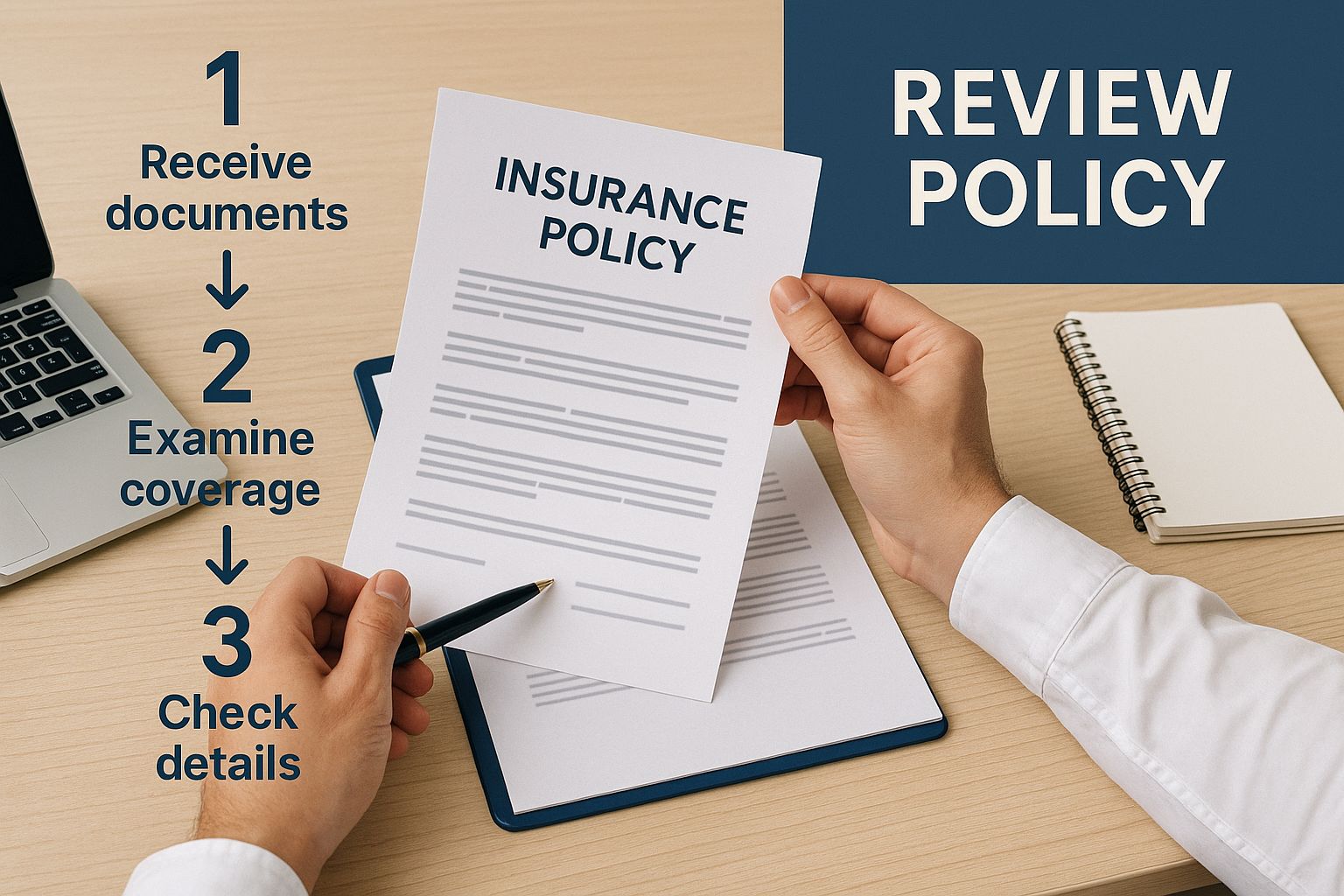
This first step—a thorough policy review—is the foundation for making a smart switch. You have to know what you have before you can find something better.
Taking Advantage of Market Conditions
Sometimes the market itself creates the perfect opportunity. For instance, reports from Q2 2025 showed that global commercial insurance rates had dropped for the fourth quarter in a row, with an average decline of 4%. When the market softens like that, it's often a prime time for consumers to find a better deal.
To help you visualize the journey, here’s a high-level roadmap. Think of this as your game plan for navigating the switch smoothly and confidently.
Your Roadmap for Switching Insurance
| Phase | Key Action | Main Goal |
|---|---|---|
| Phase 1: Evaluation | Review your current policy documents and assess your coverage needs. | Understand what you have and what you truly need. |
| Phase 2: Shopping | Gather and compare quotes from at least three different insurers. | Find the best combination of price, coverage, and service. |
| Phase 3: Transition | Purchase the new policy and confirm its effective date. | Secure your new coverage before the old one ends. |
| Phase 4: Cancellation | Formally cancel your old policy and request any applicable refund. | Finalize the switch and ensure you aren't paying for two policies. |
Following these phases ensures you don't miss a beat and, most importantly, don't accidentally leave yourself uninsured.
Switching insurance isn't just another chore on your to-do list; it's a strategic financial move. By periodically re-evaluating your coverage, you make sure your most important assets are properly protected without overspending.
Ultimately, knowing when to switch is all about being proactive. Don't wait for a denied claim or a surprise bill to realize you're underinsured or paying too much. Taking control of your insurance puts you firmly in the driver's seat of your own financial well-being.
Get Your Ducks in a Row Before You Shop
Jumping into the quote process without your current policy details is a recipe for frustration. Think of it like trying to get a price for a trade-in without knowing the year, make, or model of your car—you’ll only get vague guesses. A little prep work makes the whole experience faster and gets you a much more accurate comparison.
Your single most important document is your current policy’s declarations page. This is the one-page cheat sheet that summarizes everything: your coverage, your limits, your deductibles. It’s the blueprint you'll use to build your search.
Without it, you’re flying blind and might end up comparing a fantastic new policy to a bare-bones old one, or vice-versa.
Build Your Insurance Snapshot
Before you even think about calling an agent or filling out an online form, pull all your key information into one place. This little "insurance snapshot" will save you from digging through a filing cabinet every single time.
Here's what to include:
- Policy Basics: Your current policy number and the dates it starts and expires.
- Coverage Limits: What are the actual dollar amounts for liability, property damage, and personal injury? Write them down.
- Deductibles: How much do you have to pay out-of-pocket for a claim? Note this for your home, car, or boat. It’s a huge factor in your final price.
- Endorsements: Do you have any special add-ons, like extra coverage for jewelry, a home office, or boat equipment? These are often called riders, and you need to account for them.
Having this ready makes getting quotes so much faster. You can give every company the exact same information, ensuring the prices you get are for the exact same level of protection.
Don't Forget the Personal Details
Your policy is only half the story. Insurers need to know who and what they’re covering to figure out their risk. This is where your personal history comes into play.
Gather these details, too:
- For Your Cars: The Vehicle Identification Number (VIN), make, model, year, and estimated annual mileage for every vehicle.
- For Your Drivers: The driver's license number and date of birth for everyone on the policy. Be ready with dates for any accidents or tickets in the last three to five years.
- For Your Home: Know your home's square footage, the year it was built, and rough dates of any major updates (roof, plumbing, electrical).
- For Your History: Make a quick list of any insurance claims you've filed in the past five years. Yes, even the small ones.
An honest and complete picture of your history is non-negotiable. Hiding a past fender-bender or a small water claim will only get you an inaccurate quote. The company will find it later, and your premium will either jump unexpectedly, or they could deny your coverage outright.
This prep work isn't just about speed; it's about putting you in control. When you know exactly what you have and what you need, you won't be tempted by a super-low price that comes with dangerous gaps in coverage. It allows you to confidently answer an agent's questions and ensures that when you do decide to switch, it’s a smart choice based on real value, not just a cheap premium. Sometimes, this level of detail can even uncover other ways to save. For homeowners, it might even open your eyes to options beyond insurance, like learning how much Florida homeowners could save by dropping property taxes.
Comparing Quotes Beyond the Price Tag

Once you have your paperwork ready, the real hunt begins. The sweet spot is gathering three to five quotes. This range gives you a solid feel for the market without getting bogged down in endless options.
I always recommend a blended approach: use online comparison tools for speed, call an independent agent for their inside access, and go directly to one or two top-rated insurers yourself. This multi-pronged strategy ensures you see the whole picture. An online tool might find a great deal from a digital-first company, while an agent could connect you with a regional insurer that has fantastic rates but doesn't show up in broad searches.
But here’s the most critical piece of advice I can give you: the cheapest quote is rarely the best quote. A low premium can easily hide sky-high deductibles or shocking gaps in coverage. Your job is to look past that initial sticker price and figure out what you’re actually getting for your money.
The Art of the Apples-to-Apples Comparison
To truly weigh your options, you have to be sure you're evaluating identical products. This is where the "insurance snapshot" you prepared earlier becomes your best friend. For every quote you get, you need to line it up against your current policy and the others.
Drill down on these three core areas to see what’s really going on:
- Coverage Limits: Does Quote A offer the same $300,000 in liability coverage as Quote B? If one is way cheaper, double-check that they haven't quietly lowered a critical limit.
- Deductibles: A quote might be $40 cheaper per month, but if the agent raised your auto collision deductible from $500 to $1,500, that small monthly saving just cost you an extra $1,000 out-of-pocket after an accident.
- Endorsements and Exclusions: Did your old policy have a specific rider for expensive camera gear or a home office? Make sure the new quotes include it. Just as important, scan the fine print for new exclusions that your current policy doesn't have.
This is a non-negotiable step when switching insurance companies. Matching these details precisely ensures the price differences are legitimate, not just the result of a watered-down policy. In fact, reviewing these details can sometimes highlight other savings opportunities, and our guide on how to lower car insurance costs offers even more tips.
Remember this: a slightly higher premium for a policy with a lower deductible and more robust coverage is almost always the smarter long-term investment. Don't sacrifice thousands in future protection to save a few dollars today.
Investigating an Insurer's Reputation
A great price from a company that ghosts you when it's time to file a claim is completely worthless. Before you commit, you have to vet the insurer's customer service record and financial stability. At the end of the day, an insurance policy is just a promise—you need to know the company can and will keep it.
Start by checking the independent rating agencies. These organizations do the heavy lifting, analyzing thousands of customer surveys and financial statements for you.
- Customer Service Ratings: Look up the companies on your shortlist on sites like J.D. Power. They publish annual rankings for claims satisfaction and overall customer experience. A company that consistently ranks near the top is a much safer bet.
- Financial Stability Ratings: Use resources like A.M. Best or Standard & Poor's (S&P) to check an insurer's financial strength rating. You're looking for a grade of "A" or higher, which signals the company has a strong ability to pay out claims, even during a major disaster.
This isn't just about dodging bad apples; it's about finding a true partner. The peace of mind that comes from knowing your insurer will be responsive and fair during a stressful time is a benefit you can't put a price on.
This trend of looking for more than just a low price is growing. A 2023 EY Global Insurance Outlook noted that with demographic shifts—like Millennials now making up over 50% of the US workforce—there is a greater demand for flexible and high-value insurance solutions. That pressure has led to more people switching providers to find a better fit. You can read more about it in the full EY outlook report. This shift means insurers are competing not just on cost, but on service and value, giving you more power as a consumer than ever before.
Locking In Your New Policy to Avoid Gaps
You've compared quotes, vetted the companies, and finally picked your new policy. Now comes the single most important step in this whole process: making sure your new coverage is officially active before your old policy ends.
The golden rule is non-negotiable—never leave yourself uninsured, not even for a minute.
A gap in coverage can trigger a domino effect of problems. For drivers, it can mean state fines, a suspended license, and much higher premiums down the road. For homeowners, a lapse could violate your mortgage terms, giving your lender the right to slap you with expensive force-placed insurance and send you the bill.
The good news? Avoiding this mess is simple. It just takes a little bit of careful timing.
Finalizing the Details and Setting Your Start Date
Once you give your new agent the green light, they’ll walk you through the final application. This is where you’ll formally sign off on all the details (usually with a quick e-signature) and make your first payment.
That payment is what seals the deal. It's the action that officially brings your new policy to life.
When picking your start date—also known as the effective date—be strategic. The goal is to have your new policy kick in on the exact same day your old one is scheduled to end.
For example, if your current car insurance expires at 12:01 AM on June 15th, your new policy should be set to start at 12:01 AM on June 15th. This creates a seamless, gap-free transition. Honestly, it's better to have one single day of overlap (paying for two policies for 24 hours) than to risk being uninsured for even an hour.
Verifying Your Coverage Is Active
After you pay, you’ll get a flurry of emails and documents. Don't just file them away. Your first job is to find your new policy declarations page and confirmation.
Here’s exactly what to look for to confirm your policy is live:
- Policy Number: You should have a unique policy number assigned specifically to you.
- Effective Date: Double-check that the start date and time are exactly what you asked for.
- Coverages and Deductibles: Do one last scan to make sure the coverage limits and deductibles match the quote you agreed on. Mistakes happen, and now is the time to catch them.
- Listed Drivers, Vehicles, or Properties: Confirm every person, car, or address is listed correctly. A misspelled name or a wrong Vehicle Identification Number (VIN) can turn into a major headache later on.
A policy isn't really "active" until you have proof of it in your hands. Download your digital insurance cards right away and save a copy to your phone. It’s also smart to print a copy for your glove box, just in case.
If you spot anything that looks off, call your new agent or insurance company immediately to get it corrected. Don't just assume a small error will work itself out.
What Happens If You Have an Open Claim?
I get this question all the time: "Can I switch insurance companies if I have an open claim with my current one?" The answer is yes, absolutely. But you need to understand how it works.
Your old insurance company is still 100% responsible for handling and paying for any claims that happened while their policy was active. That claim doesn't move over to your new provider.
Let's say you had a fender-bender on May 20th and your new policy starts on June 1st. Your old insurer will see that May 20th accident through to the end. Your new policy only covers things that happen on or after June 1st. You'll still need to cooperate with your old company until that claim is fully resolved, and it's crucial to disclose any open claims to your new insurer, as it might affect your final rate. But it won't stop you from making the switch.
By managing your start date and triple-checking your new documents, you can guarantee a smooth and secure transition. Now that your new policy is locked in and you have proof of insurance, you can confidently move on to the final step: officially canceling your old coverage.
Making a Clean Break from Your Old Policy

You’ve locked in your new policy and have the digital insurance cards ready to go. Great! Now for the final, critical step: officially breaking up with your old insurer.
You absolutely don’t want to rush this part. Properly ending the old policy is the key to dodging surprise bills and, just as importantly, getting back any money you’re owed.
A word of warning: never just stop paying the bill. Doing that will trigger a cancellation for non-payment, which is a black mark on your insurance history that can haunt you with higher rates down the road. You need to formally notify the company you're leaving.
How to Tell Them You’re Done
Most insurers give you a few ways to cancel, and the best route often depends on how you bought the policy in the first place.
Here are the typical options:
- Call Your Agent: If you have a local or independent agent, this is usually the quickest and easiest path. They’ll know exactly what to do and can handle the paperwork for you.
- Phone the Insurer Directly: You can always call the main customer service line. Just be ready with your policy number so they can pull up your account quickly.
- Send a Formal Letter: This is the old-school approach, but it gives you a solid paper trail. You can do this via email or, for extra peace of mind, certified mail.
No matter which method you pick, have your old policy number and the start date of your new policy handy. The goal is to set your cancellation date for the exact same day your new coverage begins. No gaps!
The Cancellation Letter: A Simple Template
If you decide to put it in writing, there's no need to compose a masterpiece. Just keep it short, professional, and crystal clear. You want to leave zero room for misunderstanding.
Here’s a simple template you can use:
[Your Name]
[Your Address]
[Your Phone Number]
[Your Email Address]
[Date]
[Insurance Company Name]
[Insurance Company Address]
Re: Cancellation of Policy Number: [Your Old Policy Number]
To Whom It May Concern,
Please accept this as formal notification to cancel my [Type of Insurance, e.g., Auto, Home] policy, number [Your Old Policy Number].
I request the cancellation be effective as of [Date], which is the start date of my new coverage.
Please process any prorated refund due to me for the unused portion of my premium and send it to the address listed above.
Kindly provide written confirmation of this cancellation to both my mailing address and email for my records.
Thank you for your assistance.
Sincerely,
[Your Signature]
[Your Printed Name]
Get Your Refund and Confirmation
Two things absolutely must happen before you can consider this process finished.
First, talk about your prorated refund. If you paid your premium for a full six- or twelve-month term, the company owes you a refund for the days you won't be using. One quick question to ask: "Are there any cancellation fees?" Some companies charge a small fee for ending a policy mid-term, and it's better to know upfront.
The final piece of the puzzle is getting written confirmation that your policy has been canceled. An email or a letter will do. Do not assume you're done until you have this document in hand. It’s your ultimate proof if any surprise bills show up later.
It’s worth noting that external pressures are pushing more people to switch insurers than ever before. For property owners, climate change is a massive factor. Insured global losses from natural catastrophes hit a staggering $100 billion in just the first half of 2025—a 40% jump from the previous year. This is making countless homeowners ask if their current insurer is really up to the task of handling these growing risks. You can read more about these global insurance industry trends and see why this is becoming such a big deal.
Common Questions About Switching Insurance
Even the smoothest insurance switch can bring up a few nagging questions. It’s completely normal. Getting these common concerns out of the way can give you that final bit of confidence you need to make the move without a hitch.
Let's walk through the questions we hear most often, from timing your switch to how it affects your credit.
Does Switching Insurance Hurt Your Credit Score?
This is probably the biggest worry we see, and the answer is a simple, straightforward no. When you apply for a new policy, insurers pull a special credit-based insurance score, not the FICO score lenders use for mortgages and car loans.
This is what’s known as a “soft pull” on your credit. Unlike a “hard pull,” a soft inquiry is invisible to lenders and has zero impact on your credit score. You can shop for quotes from a dozen different companies, and your credit rating won't budge.
Go ahead and shop around with confidence. You can hunt for better rates and stronger coverage without ever worrying that the search itself will ding your credit.
Is There a Best Time of Year to Switch?
You can technically switch your insurance at any time, but a little bit of strategy goes a long way. The absolute easiest and cleanest time to make a change is at the end of your current policy term.
When your renewal paperwork shows up in the mail—usually 30-45 days before your policy expires—that’s your signal to start shopping. This timing is perfect for a few reasons:
- No Cancellation Fees: You avoid any potential penalties for ending a policy mid-term.
- Seamless Transition: It's simple to have your new policy kick in the very day after your old one ends, leaving no gaps.
- Clear Target: Your renewal offer gives you a hard number to beat. You know exactly what you need to save to make a switch worthwhile.
Of course, if you’re hit with a massive rate hike or you've had a terrible customer service experience, switching mid-term is perfectly fine. Just make sure you ask about any short-rate cancellation fees before you make the final jump.
What If I Have a Loan on My Car or Home?
This adds one small but critical step to your checklist: you have to notify your lender. Whether you have a mortgage on your home or a loan on your car, your lender is listed on your policy as an "additional insured" because they have a financial stake in your property.
When you switch, your new insurance company will typically send the updated policy information—the proof of insurance—directly to your lender. But don't assume it's been handled. It’s your responsibility to make sure it gets done.
A quick call or email to your lender with your new policy number is all it takes. This simple step prevents a huge headache, as it stops them from thinking you've dropped your coverage and hitting you with wildly expensive "force-placed" insurance.
Should I Tell My Old Company I'm Shopping Around?
This one is purely strategic. If you have a great relationship with your current agent and you're only leaving because of the price, it can be worth giving them a chance to match a competitor's offer. Sometimes they can dig up a discount you didn't know you qualified for to keep your business.
On the other hand, if you're leaving because of poor service or a bad claims experience, there’s really no benefit to giving them a heads-up. Your goal is to find the best value and protection for you, not to haggle with a company that already let you down.
At MyEasyRate Insurance, we simplify the process of finding the right coverage for your car, home, or business in South Florida. Our team is dedicated to helping you compare options and make a confident, informed decision. Get a personalized quote and see how easy switching can be by visiting us at https://myeasyrate.com.
Article created using Outrank